Andrew worked at an all-you-can-eat Korean BBQ restaurant and had never written a line of code. One month into the Claude Code Challenge he built FixMyShift, a tool that catches payroll mistakes before they cost the restaurant money by pulling its Homebase and Clover data into one clean daily view.
“I literally had no experience. I still don't write code, but I understand it so much more, and I know how to operate Claude Code.”
The problem.
Andrew's restaurant runs on Clover, the POS system that captures every sale. On top of it they used Homebase, a Clover add-on, to clock staff in and out and tally hours for each pay period.
One problem. Homebase showed everything in 7-day windows, but the restaurant pays every two weeks.
So at the end of every pay period his boss was stuck converting values by hand and cleaning up the numbers before sending them to the CPA. It was slow, it was manual, and the mistakes only surfaced right at the deadline.
What Andrew built.
Tom's brief in the challenge was simple. Take something repetitive you deal with every day and make it better. Andrew picked payroll.
He built FixMyShift, a tool that catches payroll mistakes before they cost you. It connects to the Homebase API, auto-fills the sales figures from Clover, and lays everything out on one clean interface he designed himself.
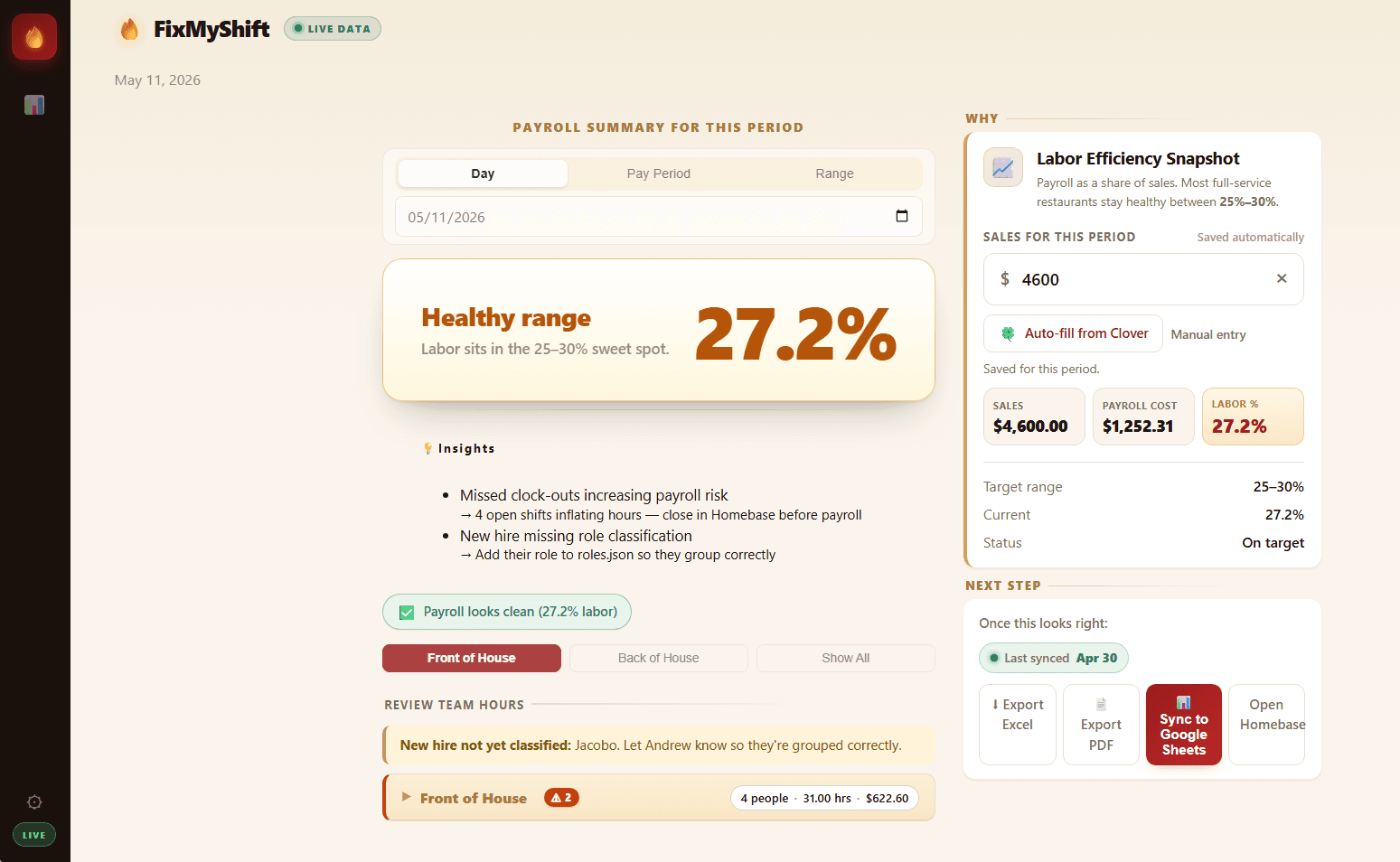
Instead of waiting two weeks to find out something is off, the team now sees it daily. FixMyShift breaks the period into day, pay-period and range views, so the bi-weekly mismatch that started this whole thing is gone.
It shows labor cost as a percentage of sales against a healthy 25-30% target, then flags the things that quietly inflate payroll. Missed clock-outs. Open shifts that were never closed in Homebase. New hires missing a role so they group correctly. Staff are split into front of house and back of house, and once it looks clean Andrew exports to Excel or PDF, or syncs straight to Google Sheets.
He didn't stop at the dashboard. He built a full landing page for it too, the kind of thing you would expect from a real product, not a first build.
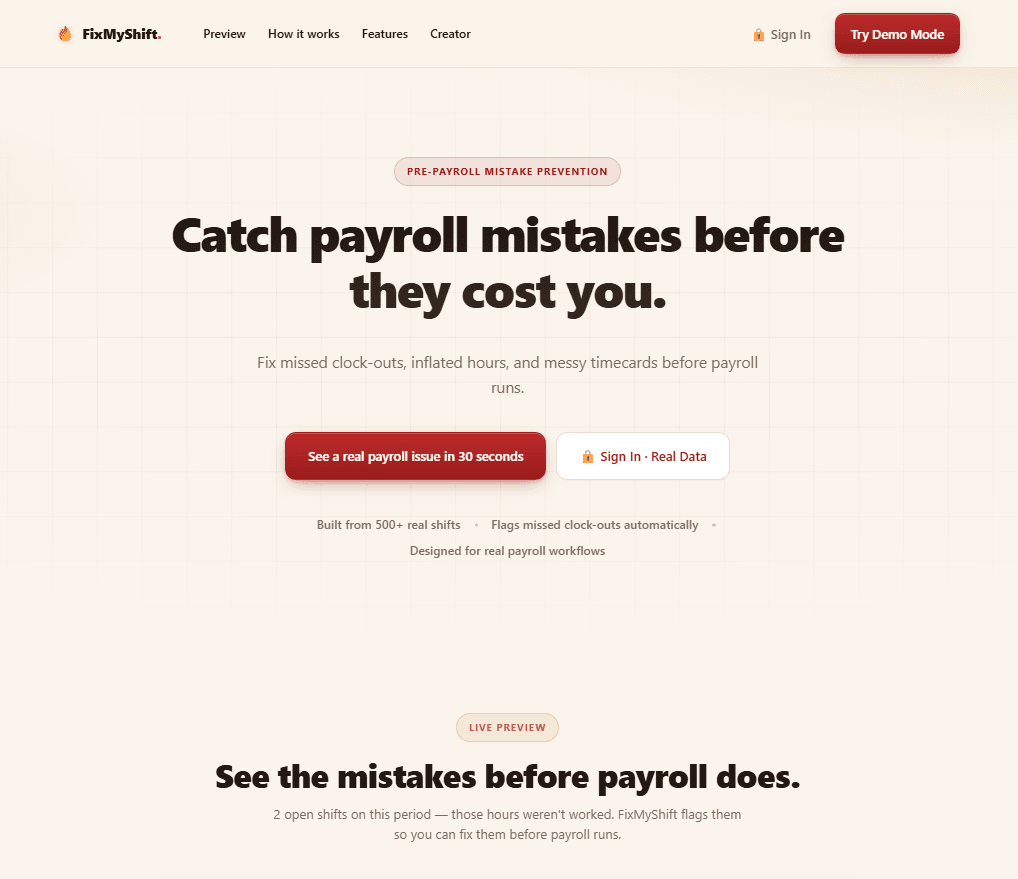
The first working version took about two weeks. Everything after that was him refining the interface because he wanted it to feel good to use, not just work.
Where he is now.
Before the challenge Andrew was using ChatGPT and Claude Desktop for basic questions. He'd never thought about opening a terminal and building something real.
He found Tom on YouTube, watched enough to trust the process, and joined with no real hesitation. Things clicked halfway through the first module.
The shift he describes is the one that matters most. He stopped asking where do I even start and started asking what should I build next. He's now weighing whether to sell FixMyShift to other businesses or build his next tool, a dashboard that ties together the legacy systems at the gym he just moved to.
Take the leap. Ground yourself in a strong foundation and find a community of people who are just as interested. Then you feel ready for whatever AI brings next.