Fee proposals, permit narratives, RFI responses, submittal logs, monthly client reports. The work nobody trained for and everyone resents doing. Claude Code reads your project archive and your spec library and produces the artefact. Your principals back on the design.
Every engineering firm I have worked with describes the same problem. The principal is the bottleneck. Fee proposals sit in a queue because only the partner has the context to write them. Permit packages take a week because someone has to chase boilerplate across ten past projects. RFIs and submittals eat the project manager's day. The design work, which is the thing the firm actually sells, gets done after six.
Claude Code is the wedge. The skills you write read your project archive, your spec library, and your past proposals. They draft the fee proposal against a similar past job. They pull the permit narrative from the project parameters. They answer the RFI against the contract documents and flag what needs a design decision. The engineer reviews the artefact instead of generating it from a blank page.
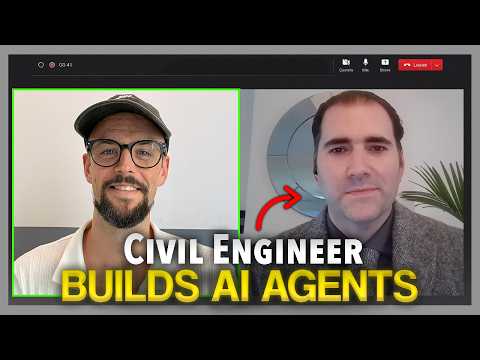
Chris Cole runs a civil engineering firm. He spent six months thinking about an internal app his team needed and kept putting it off because nobody at the firm was a developer. Three weeks into the Challenge he opened Claude Code on a Saturday morning and shipped the app by Sunday night. That is the shift. The technical part stops being the wall. What is left is knowing what your firm actually needs.
Fee proposals out same day, not next week.
Permit narratives drafted from the project parameters and your past submittals.
RFI and submittal responses with the citation built in. The PM reviews instead of writes.
Principals back on the design work, where the margin lives.
Claude reads your past project files, finds the closest matches by scope and discipline, and drafts the fee proposal against your standard scope language and rate sheet. The partner reviews and signs. Same-day turnaround on a document that used to wait a week for a free hour.
Project parameters in, narrative out. Claude pulls the standard sections from your library, writes the project-specific paragraphs, and assembles the package the way the jurisdiction wants it. The CAD team stops being the editor of last resort.
Claude reads the contract documents, the spec, and the question. It drafts the response with the citation built in and flags anything that needs a design call. The PM signs off instead of building the answer from scratch every time.
Drop the drawing or the spec into the workflow. Claude checks the callouts against the relevant code section, your office standards, and the project spec. It produces a checklist of items to fix before the QC review. The senior engineer reviews the diff, not the document.
Time entries, project budget, milestones, and email correspondence in. Claude drafts the monthly client report and the matching invoice narrative. PM reviews and sends. The reporting that used to eat a Friday afternoon gets done in fifteen minutes.
Chris Cole had an app his firm needed and no developer to build it. He opened Claude Code on a Saturday morning, described what he wanted, and shipped it by Sunday night. The technical wall is gone. What is left is knowing what to build.
No. The interface is plain English. You describe what you want and Claude Code does the work. Chris Cole had zero developer background when he built his firm's internal app over a weekend. The skill you are learning is operating the agent, not programming.
Those features automate inside the drawing. They do not touch the proposal, the permit narrative, the RFI response, the client report, or the invoice. That is where the partner's time actually goes. Claude Code sits outside the drawing and reads everything else your firm runs on.
Claude Code runs on your machine and only sends to Anthropic what you choose to send. You can point it at an on-prem file share and keep the project archive local. The same posture applies as any other professional tool that touches client work, and there is a section in the setup guide for firms working under NDA.
Pick the bottleneck the principal complains about most. For most firms that is the fee proposal. Build one skill against the proposal library and the past project archive. Run it on the next live opportunity and watch the partner review a draft instead of a blank page. Then add the next skill. Most firms have three or four that compound.
Mentorship is for civil engineers and engineering firm owners who want to skip the wrong turns and build the operator setup with the person who has already done it. Apply in two minutes. If we are a fit, we get on a call.
Apply for mentorship →